Giza
The Reincarnationist PapersGiza is the setting of the Cognomina’s oldest remembered practice: a yearly reunion at the pyramids that made return, recognition, and continuity possible across successive lives. Though the society itself was formally established in Zurich in 839, its tradition of members finding one another reaches back to meetings at Giza in the fourth century.
The First Reunions
The story begins with two members who met at the pyramids of Giza each year on the summer solstice. They returned to the same place so that if one died, the other could wait for him to come back in a new body. The location thus served as more than a landmark: it offered a fixed point against which lives, deaths, and renewed identities could be recognized.
From Landmark to Embe Mark
After a few lives, the members began marking themselves with the symbol of their assigned meeting place to make identification easier in fresh incarnations. The Embe tattoo derives from the three peaks of the pyramids. Giza’s landscape was therefore carried beyond the meeting itself, converted into a bodily sign that could travel with members when they returned in new bodies.
A Meeting That Enlarged the Group
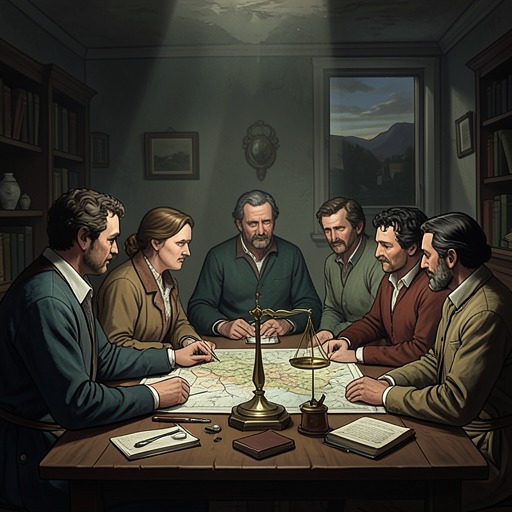
The origin account describes one member returning as a young man after an eighteen-year absence and finding his old friend at Giza, accompanied by two others who bore the same Embe symbol. The first member had discovered someone who already knew another of the group. In this telling, the annual reunion that began as a promise between two friends became the means by which a wider community recognized and found its members.
Legacy in the Cognomina
Poppy distinguishes the Giza tradition from the later institution: the meetings date to the fourth century, while the first six members established the Cognomina in Zurich in 839. The Giza mark nevertheless persists in the society’s later life. Members wear the Embe tattoo after Ascension, the trial through which they prove their identity and reenter the group in a successive incarnation. Giza’s enduring significance lies in this passage from place to sign: the pyramids first anchored reunion, then gave the society a recognizable emblem of memory and return.